Editing Theory
Editing
Order of shots
➤can help to present a story. linear chronology
➤out of chronological order - flashbacks / forwards
➤meaning of a sequence can change depending on the order the shots are out together
➤putting two shots together can suggest a connection or emphasise contrast
soviet montage theory
➤the Kuleshov effect is a concept in filmmaking created by Lev Kuleshov in the 1920's
➤he put together a film, showing the expression of an actor, edited together with a dead woman, plate of soup and a woman on a recliner
➤coined by Sergei Einstein. SMT is the idea that placing together separate sections of film could create ideas or have an impact beyond the individual shots
e.g ➤ eye + water = crying
➤ear + next door = listening

transitions
➤process of moving from one shot to another
➤most commonly used transition is the cut. where one shot is instantaneously replaced with the next
fade
➤the preaching shot fades into black from which the following shot emerges
disown or cross fade
➤shot merges into a following shot, resulting in the two shots being superimposed
wipe
➤where an image is revealed over another horizontally, vertically, diagonally or even using a shape like a star or diamond
➤can add campness ( silly ) to the transitions
pace & rhythm
➤duration of shot reflects narrative context
➤short shots duration conveys action and urgency
➤long shot duration slow pace conveys intensity and intimacy → focuses on facial expressions & makes the audience feel more involved and relaxed
Parallel editing
➤parallel editing is also known as cross cutting
➤the technique of parallel editing is used to build suspense and helps the with the cinematic flow
➤its also used to give additional exposition to the narrative of the film
➤its the technique of alternating two or more scenes that often happen simultaneously but in different locations

➤match cuts form the basis for continuity editing
➤eg. in a duel a shot can go from a long shot on both contestants via a cut to a medium closeup shot of one of the duelists
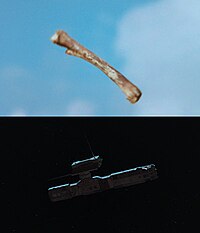
➤they're usually caused by framing which is quite similar
➤this type of edit gives the effect of jumping forwards in time
➤jump cuts are considered a violation of classical continuity editing

➤the technique of parallel editing is used to build suspense and helps the with the cinematic flow
➤its also used to give additional exposition to the narrative of the film
➤its the technique of alternating two or more scenes that often happen simultaneously but in different locations
Match Cut
➤its a cut from one shot to another where the two shots are matched by the action or subject and subject matter➤match cuts form the basis for continuity editing
➤eg. in a duel a shot can go from a long shot on both contestants via a cut to a medium closeup shot of one of the duelists
Jump cut
➤in a simple form its an abrupt transition from one scene to another➤they're usually caused by framing which is quite similar
➤this type of edit gives the effect of jumping forwards in time
➤jump cuts are considered a violation of classical continuity editing

Comments
Post a Comment